Most people come to meditation with a modest, sensible hope: fewer racing thoughts, a bit more ease. Then they sit down, close their eyes, and discover their mind is exactly as busy as it was before. A week later the cushion is under the bed and the app has gone quiet.
Very little of that is a sign that meditation does not work for you. It is usually one of five predictable missteps — small assumptions that quietly drain the practice of anything useful. Here is how to recognise each one, and what to do instead.
Mistake one: Trying to force the mind still
"I couldn't stop thinking." It is the most common complaint among new meditators, and it usually comes with a note of personal failure attached. But you cannot instruct the mind to go silent any more than you can instruct your heart to beat more slowly. Attempting it adds a second layer of tension: the thoughts, plus the effort of suppressing them.
Change the job description. Instead of emptying the mind, notice what is already there. Pick one anchor — the feeling of breath at the nostrils, the weight of your feet on the floor, the sounds in the room — and let your attention rest there. When it drifts, that is information rather than failure. A useful habit is to label it silently: thinking, planning, replaying. Then return to the anchor. The mind behaves more like a river than a pond, so you are not damming it; you are learning to sit on the bank.
Mistake two: Expecting an instant dose of calm
Sessions vary. Some are settled and spacious. Others are restless, dull, or spent half-asleep. If you judge every sit by how calm it felt, you will abandon the practice during precisely the weeks it is doing its quiet work: building your ability to notice where your attention has gone and bring it back.
Measure something you actually control. Did you turn up? Did you notice when you drifted? Those are the skills involved, and they show up long before any reliable sense of peace does.
There is a second trap just behind this one: chasing a good session. If Tuesday's sit felt spacious, the temptation on Wednesday is to spend the whole time trying to recreate it. That is striving dressed up as practice. Let each session be its own thing.
A note on wellbeing: meditation is generally gentle, but it is not a treatment for everything. If you are living with anxiety, low mood, trauma or intrusive thoughts, it is worth speaking to your GP or a qualified mental health professional, and mentioning that you are meditating. Certain practices — breath-focused ones in particular — can feel activating rather than settling for some people.
Mistake three: Turning each session into a performance review
You finish, and the verdict arrives immediately: that was a bad one. Or the comparison starts: four days in a row, so clearly you are the sort of person who meditates now. Streaks, scores and self-assessment feel motivating, but they shift your attention onto the outcome and away from the practice itself.
If you want to keep track of anything, keep it factual and tiny — one word in a notebook. Restless. Sleepy. Ordinary. Observation, not judgement. "I noticed my mind wandered a lot today" is useful information. "I'm rubbish at this" is not a report on the session at all; it is a habit of mind that meditation tends to expose, and it softens when you stop feeding it.
Mistake four: Going all or nothing on time, posture and setting
A thirty-minute daily practice with a candle, a special cushion and a silent room is a lovely idea and a reliable way to quit by Thursday. New meditators often design the most demanding version first, then read every missed session as proof they are not the type.
Lower the bar until it is almost impossible to fail. Any of these count as practice:
- Two minutes sitting on the edge of the bed before you get up.
- Three slow breaths while the kettle boils.
- Sixty seconds of feeling your feet on the floor before a meeting or a difficult phone call.
- A body scan in bed, lights off, with no expectation of finishing it.
Posture matters less than you think
A kitchen chair is fine. A sofa is fine. Lying down is fine if you are not going to fall asleep — and if you do fall asleep, you probably needed the sleep. What helps is a position that is awake but not strained: spine relatively upright, shoulders soft, hands wherever they are comfortable, eyes closed or lowered. Discomfort is not evidence of dedication.
Mistake five: Waiting until you feel like it
Motivation is a poor foundation for anything that happens daily. It shows up generously on a quiet Sunday and vanishes on a Tuesday when work runs late. Structure does the job instead: the same time, the same place, attached to something you already do without thinking.
Two rules keep a practice alive. First, make the session small enough to complete on a bad day. Second, never miss twice. Missing once is life. Missing twice is how a practice quietly ends. If you need accountability, tell someone what you are doing, or set a weekly reminder to check in with yourself — not to score the week, just to notice whether the habit is still there. And if you miss a fortnight, do not wait for next Monday. Start at the next kettle boil.
Your next sit: a short reset
If any of the above sounds familiar, try this within the next twenty-four hours.
- Sit somewhere ordinary for five minutes. Set a timer so you are not watching the clock.
- Choose one anchor: breath, feet, or sound.
- When you notice you have drifted, note it briefly and return. No sighing, no commentary.
- When the timer ends, notice how you feel without grading it. Tired, restless and calm are all valid results.
- Repeat tomorrow, even if tomorrow's version lasts two minutes.
The practice is not the peaceful session. It is the returning — again and again, with a little less drama each time.
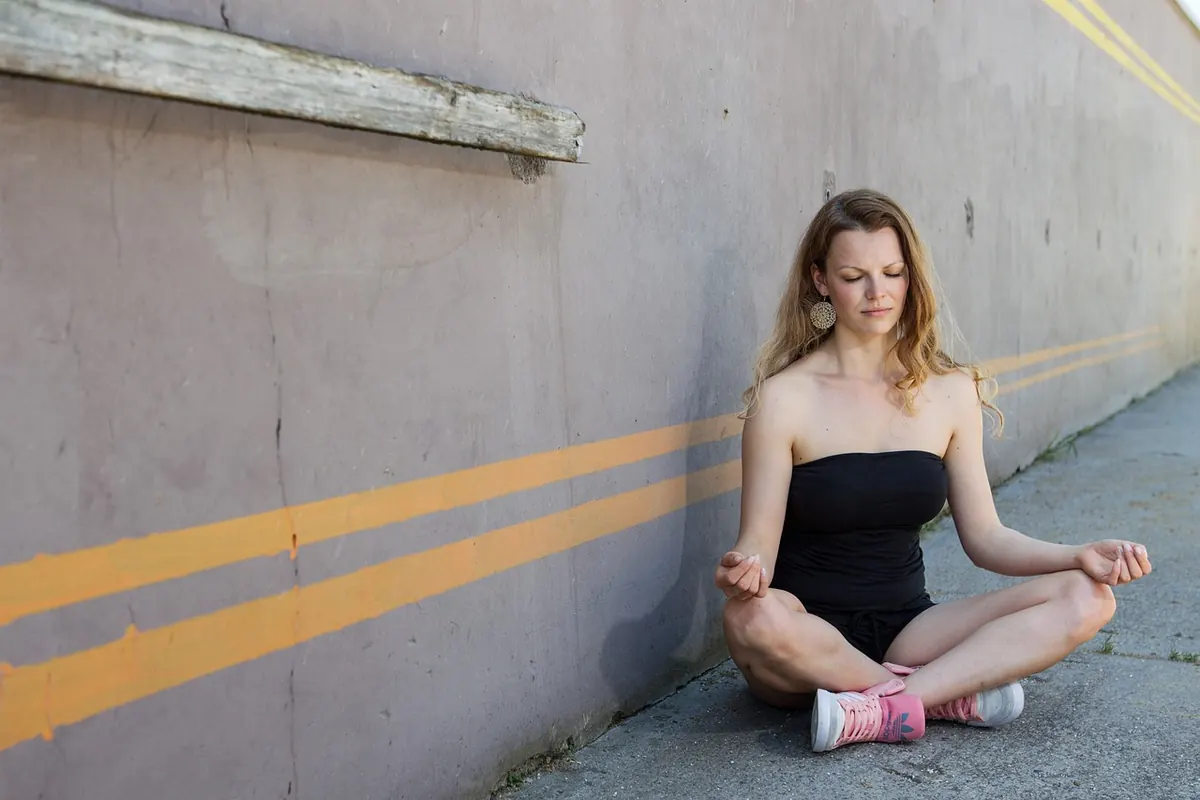
Photo: Juuucy / Pixabay